2026-08-21 · Carlos Mendoza
Water Damage Restoration Timeline: What to Expect Day by Day
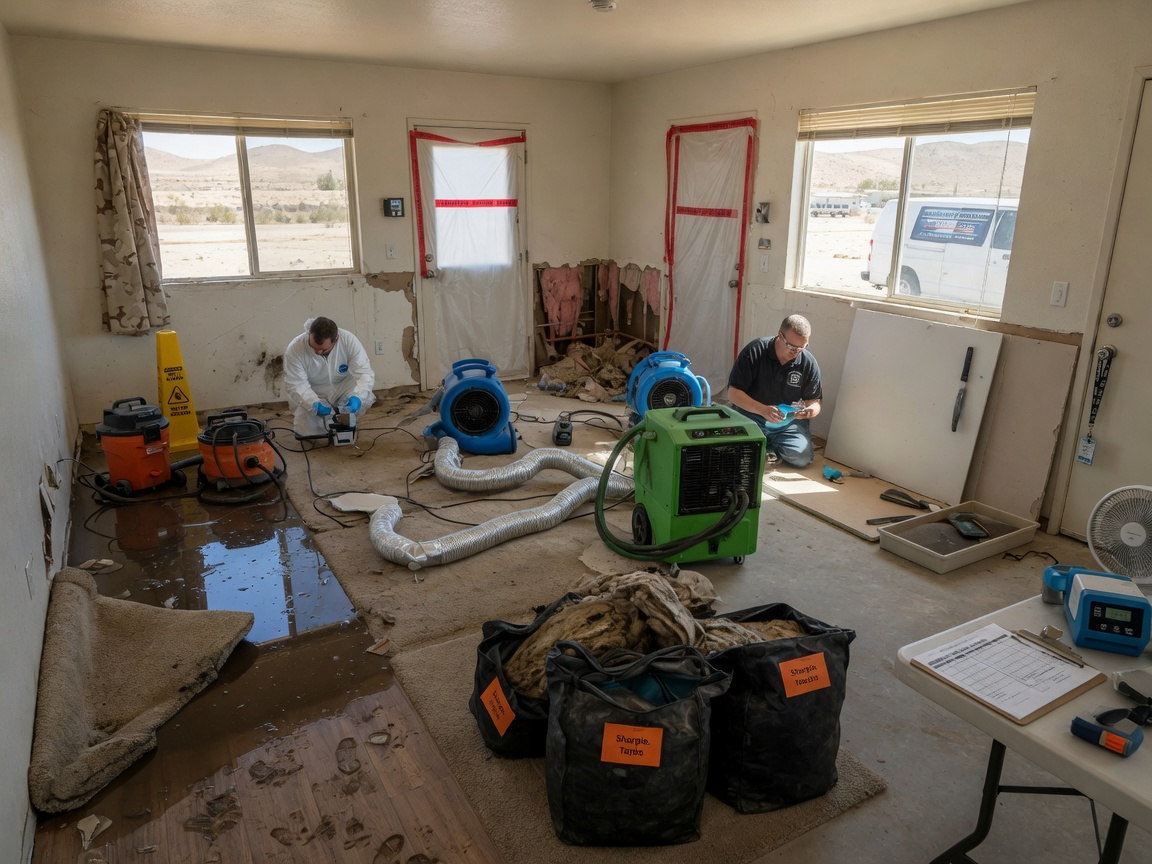
In Fort Irwin, most Emergency Water Removal projects reach Category 1 or 2 dry standards in 5–7 days when crews start extraction the same day. The hot desert climate speeds evaporation once standing water is gone, yet cold winter nights and thick concrete slabs at base housing near the National Training Center can add two extra days of monitoring.
Day 1: Initial Response and Extraction
Technicians arrive at the address in Bldg 350 area or other Fort Irwin housing within hours of the call. They map moisture with infrared cameras, isolate the source, and begin Emergency Water Removal using truck-mounted pumps rated for 200+ gallons per minute. In summer heat above 100°F, standing water on slab foundations evaporates quickly once removed, but winter nights dropping near freezing require heaters to prevent re-condensation. Military housing layouts often route plumbing through shared walls, so crews check adjacent units at the same time. Extraction continues until no free water remains on surfaces or in carpet pads.
Days 2–3: Structural Drying Setup
After extraction, crews place commercial air movers and dehumidifiers sized for the square footage. In Fort Irwin’s low-humidity desert air, relative humidity inside the structure can drop from 80% to 45% within 48 hours when equipment runs continuously. Technicians check moisture readings every 24 hours at multiple depths in drywall and under vinyl flooring common in base housing. If the loss involves a burst pipe near the Fort Irwin Museum buildings, they also pull baseboards to allow airflow behind walls. Homeowners in Barstow often see similar timelines, but Fort Irwin’s older barracks stock tends to hold moisture longer in the thicker CMU block walls.
Days 4–7: Monitoring and Mold Prevention
Daily moisture logs track progress toward the 1% or less moisture content goal. In extreme summer heat, drying can finish by day 5; cold snaps in January extend it to day 7 because nighttime temperatures slow evaporation. Crews adjust equipment placement and may add more dehumidifiers if readings stay above 16% in subflooring. Linking to the known risk of rapid mold growth after water damage, technicians apply antimicrobial treatments only where visible staining appears. Residents near the National Training Center often request after-hours updates because training schedules limit daytime access.
Days 8–14: Final Dry Verification and Hand-Off
Once all readings meet IICRC standards, equipment is removed and the space is released for repairs. In military housing, final documentation is prepared for PCS move-out inspections. Homeowners in nearby Yermo or Daggett sometimes schedule follow-up visits because dust storms can reintroduce moisture. The process concludes with a written drying log that includes hourly equipment run times and final moisture percentages for every affected material.
Contact Fort Irwin Water Damage Experts at Bldg 350, 3rd St, Fort Irwin, CA 92310 during Mon–Fri 8am–6pm or Sat 9am–2pm to start the timeline the same day.