
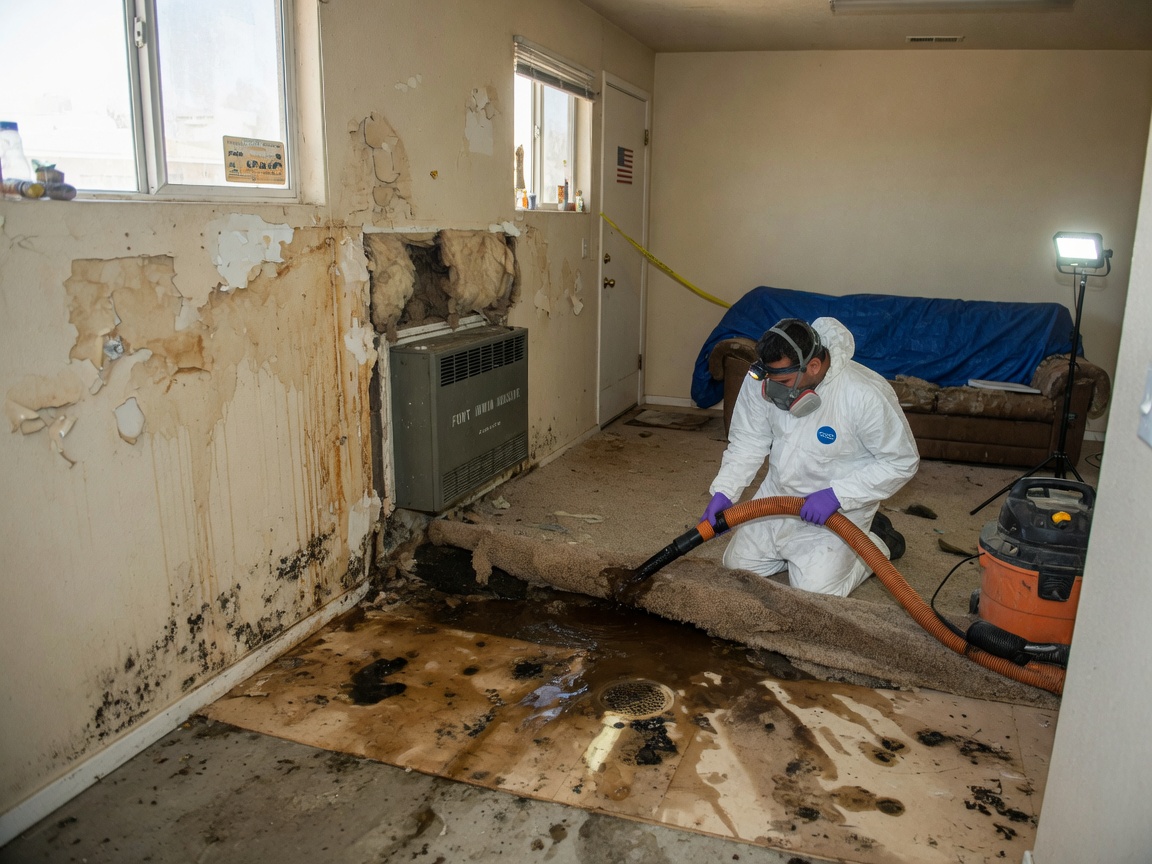
Fort Irwin military housing often features cinder block and modular construction with shared walls that let water travel between units faster than in standard civilian homes. The hot desert climate brings extreme summer heat that can mask hidden moisture until it reaches drywall or insulation, while cold winter nights slow natural evaporation and raise the risk of secondary mold growth inside wall cavities. Crews must coordinate with base housing offices for access passes and work around training schedules at the National Training Center, which frequently limits daytime entry to certain blocks.
Soil conditions around Fort Irwin consist of sandy, low-permeability desert ground that holds surface water against foundations during rare heavy rains, pushing moisture into crawl spaces and slab edges common in base housing built decades ago. Emergency water removal here requires equipment that can handle fine sand infiltration into pumps and hoses without clogging. Restoration teams also account for the proximity to Barstow when sourcing replacement materials, since supply runs can add hours if specialty drying equipment is needed beyond what fits in a single truck.
Edge cases include water migrating through utility chases that serve multiple barracks buildings and older plumbing lines that corrode faster under the temperature swings between day and night. Technicians document every step for housing management reports required on post, and drying goals must meet both insurance and base environmental standards before units are cleared for reoccupancy.
Technician insight
In Fort Irwin, the thing that catches most people out with Military Housing Water Damage is how quickly water moves through the sandy soil and into slab edges during the rare storms, then hides in cinder block cores until the cold nights drop and mold starts forming behind the paint.
Water Intrusion Through Shared Barracks Wall
A unit near the National Training Center reported water appearing in a closet after an upstairs leak. Mapping showed migration through the cinder block into the neighboring barracks room. Extraction and drying equipment ran for four days while coordinating around training schedules, and the housing office cleared both units once readings met base standards.
Military Housing Water Damage Services We Offer
✓Base Housing Flood Extraction
Rapid removal of standing water from military family homes using truck-mounted systems sized for desert sand and tight utility rooms.
✓Barracks Moisture Mapping
Thermal imaging and moisture meter surveys to locate hidden water behind cinder block walls shared between units.
✓Military Housing Drying Plans
Custom drying protocols that respect base access windows and account for extreme temperature swings between day and night.
✓Slab Edge Water Intrusion Repair
Targeted extraction and sealing at foundation perimeters where sandy soil holds moisture against older Fort Irwin housing slabs.
✓Shared Wall Water Migration Control
Isolation and drying of water that travels through common walls in duplex and barracks-style military housing.
Military Housing Water Damage Cost in CA
| Service | Typical Range | What Affects It |
|---|---|---|
| Initial Assessment And Mapping | $250–$450 | Higher when multiple units or restricted access areas are involved. |
| Emergency Water Extraction | $600–$1,200 | Varies with sand load and depth of standing water. |
| Equipment Drying Per Day | $300–$550 | Influenced by square footage and winter night temperatures slowing evaporation. |
| Shared Wall Containment Setup | $400–$700 | Required when water crosses between attached housing units. |
Ranges are typical for CA and confirmed with an exact written quote before any work starts.
How it works
- 1
Base Access Coordination
Confirm housing office approval and schedule entry around National Training Center operations before any equipment enters the unit.
- 2
On-Site Water Removal
Extract standing water with equipment suited to sandy conditions, then document moisture levels in walls and floors.
- 3
Targeted Drying And Monitoring
Place air movers and dehumidifiers while tracking daily readings to meet base housing clearance requirements.
- 4
Final Clearance Walkthrough
Review results with housing management and confirm the unit meets reoccupancy standards before equipment removal.
Pricing
Costs depend on water volume, number of affected units, and required base coordination time.